
Are Your Backyard Grapes Worth Making Into Wine?
North Van summers are warmer than people think — and a lot of local vines actually deliver. Here’s how to test whether yours are ready for the bottle, before you spend a weekend picking.
Every September we get the same happy question at the shop: “I’ve got a grapevine going in the backyard — can I actually make wine out of this?” The honest answer is: maybe. And there’s a simple way to find out before you climb a ladder in the rain to pick them.
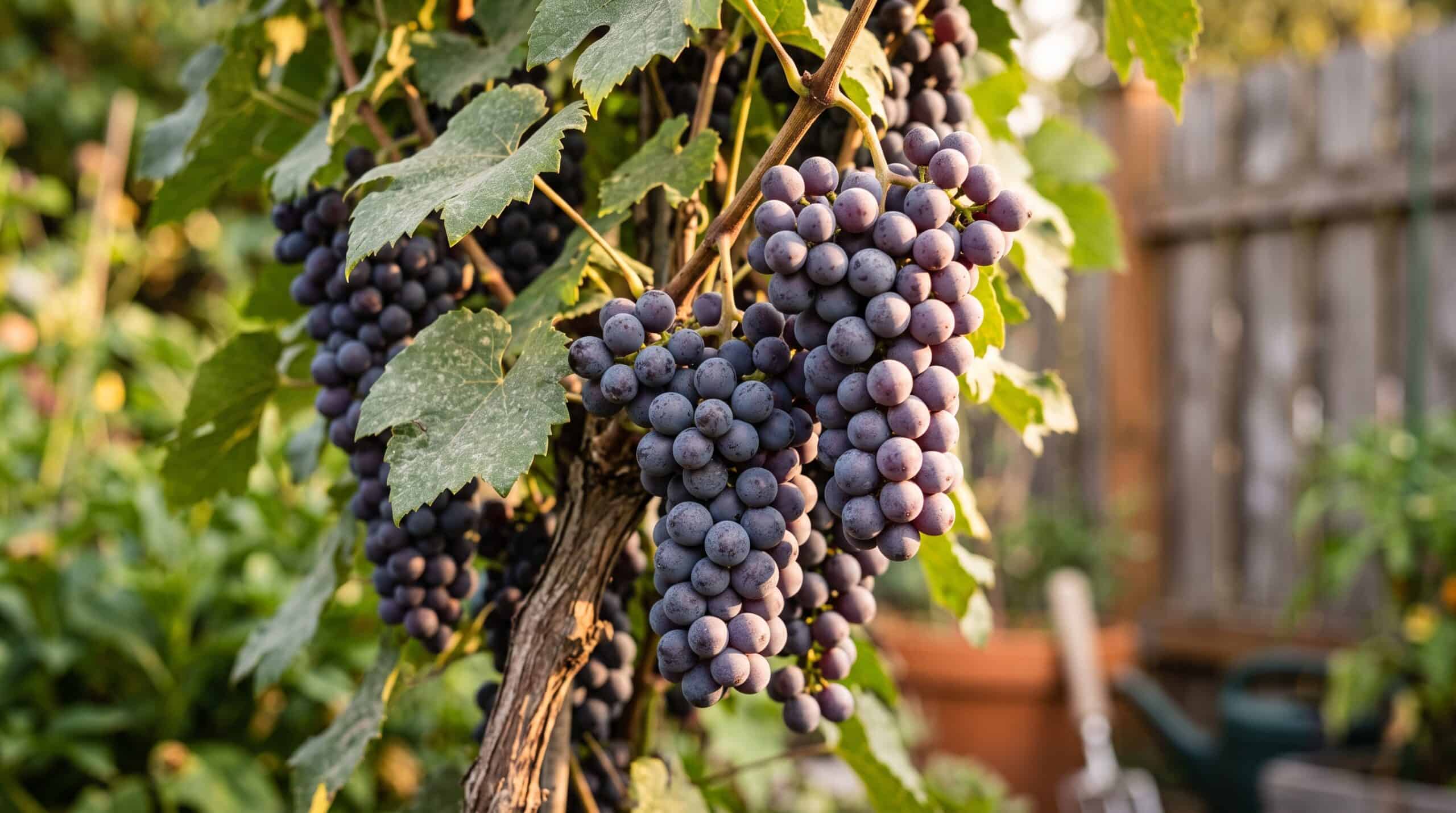
The North Shore has a cooler, temperate climate, but our summers run warm and long enough that hardy backyard vines — often Interlaken, Himrod, or a neighbour’s mystery vine that’s been there for decades — can ripen up nicely. The catch is that “the grapes look purple” is not the same as “the grapes are ready.” Colour comes weeks before real ripeness. To make wine you’ll be proud to pour, you need to look past the colour and check three numbers: sugar, acid, and pH.
First: the taste-and-look test (free, and it filters out the duds)
Before any gadget comes out, walk the vine. Grapes that are truly ready tell you so:
- Taste a few berries from the middle of different clusters. They should taste sweet and grapey, not green, not sharp. If they make you wince, they’re not there yet.
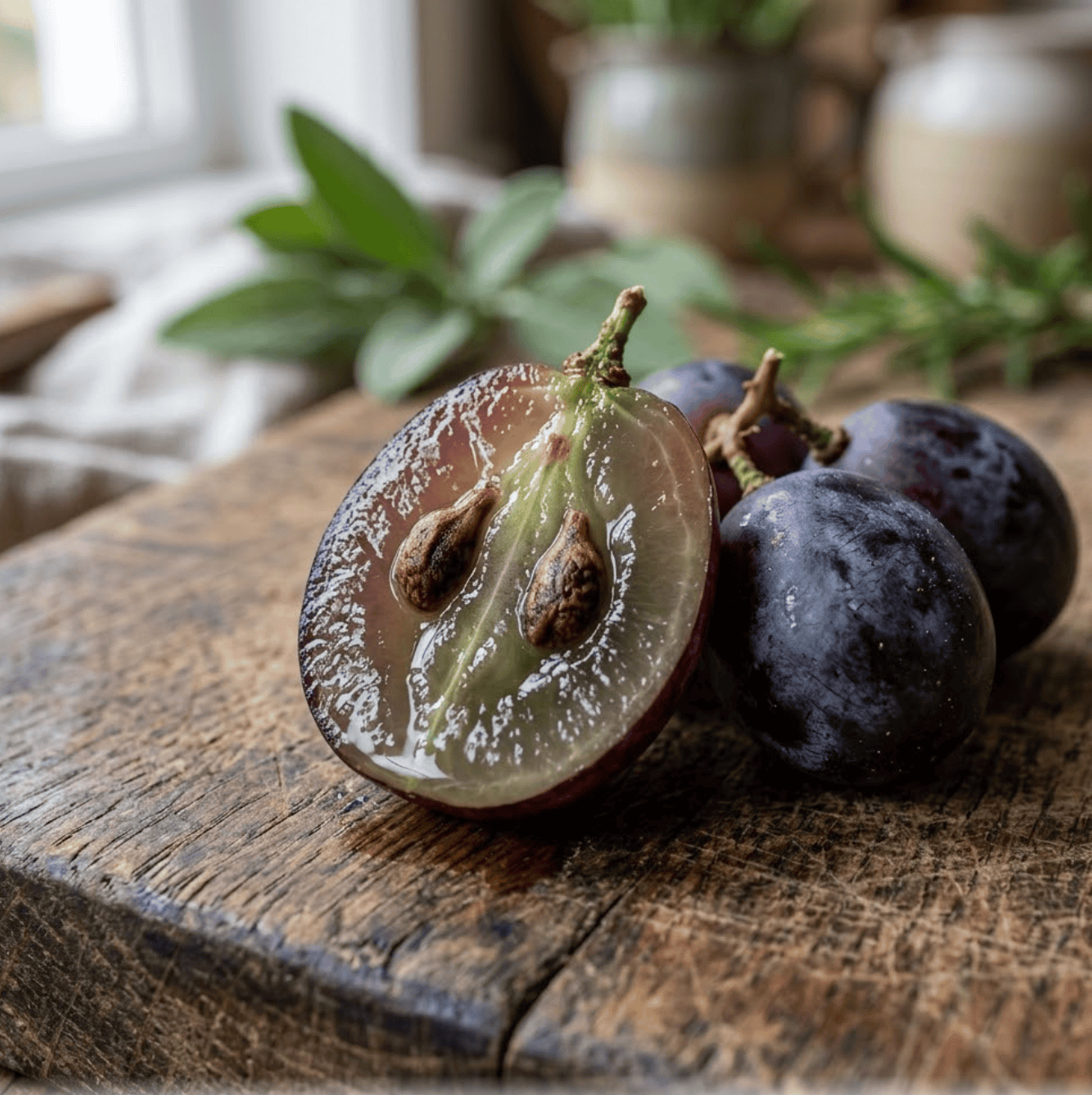
- Check the seeds. Bite one open. Ripe seeds are brown and crunchy; unripe seeds are green and bitter. This is one of the most reliable free signals there is.
- Look at the fruit’s condition. A little is fine, but if a lot of the crop is covered in mildew, split, or has been worked over by birds, it may not be worth the labour — damaged fruit brings rot and off-flavours into the batch.
If the vine passes the taste-and-look test, it’s worth measuring properly. If it fails badly, you’ve just saved yourself a weekend.
The one that matters most: sugar (Brix)
Sugar is what yeast turns into alcohol, so it decides whether you get wine or a weak, watery disappointment. Winemakers measure it on a scale called Brix — roughly, the percentage of sugar in the juice. There are two easy ways to read it:
The refractometer — the field tool
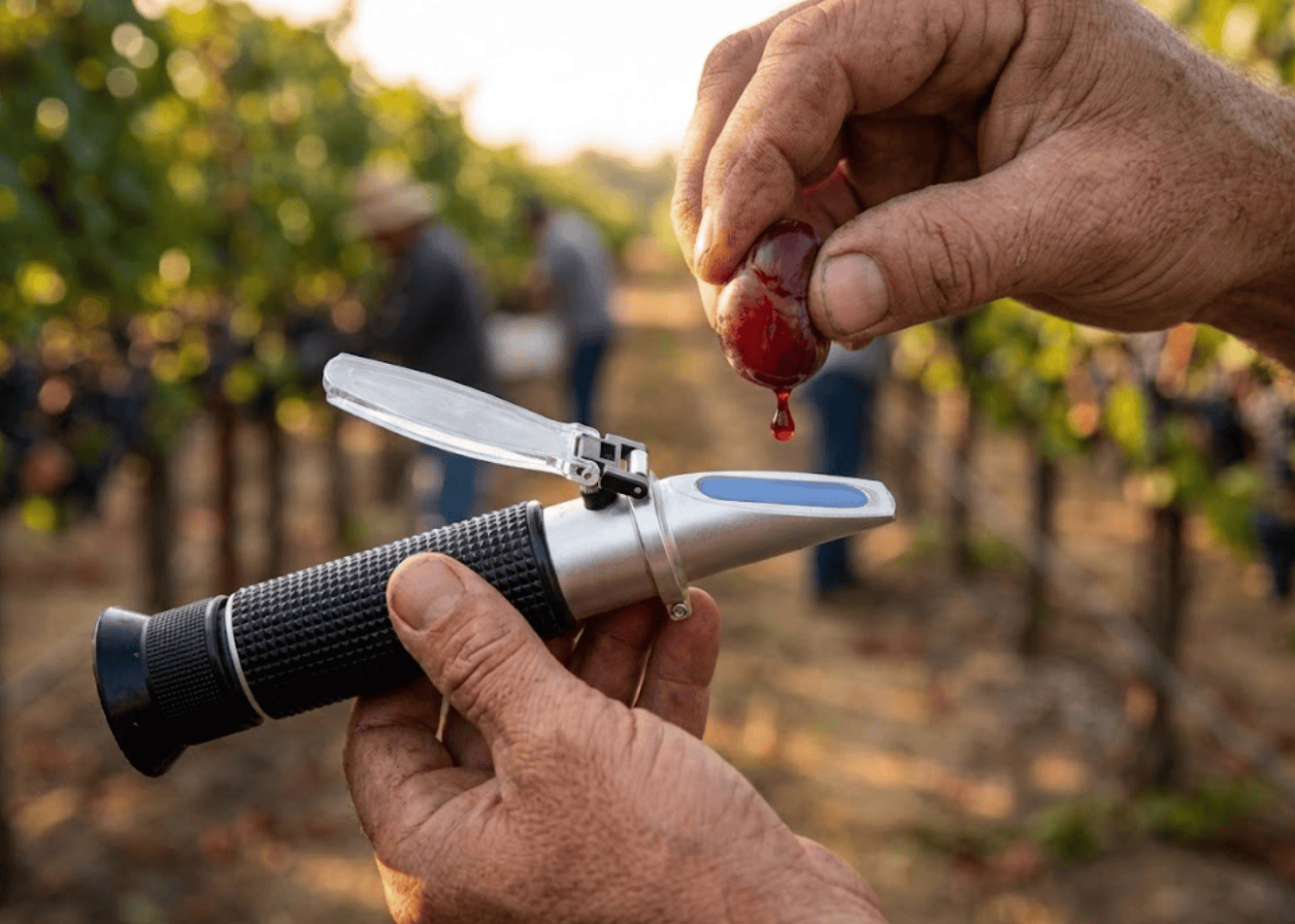
A refractometer is a little handheld scope. You squeeze one drop of grape juice onto the glass, hold it up to the light, and read the Brix number off a scale. That’s it. Because it needs only a drop, you can test grapes right on the vine, from a dozen different spots, in a couple of minutes. It’s the perfect “should I even pick these?” tool.
The hydrometer — the batch tool
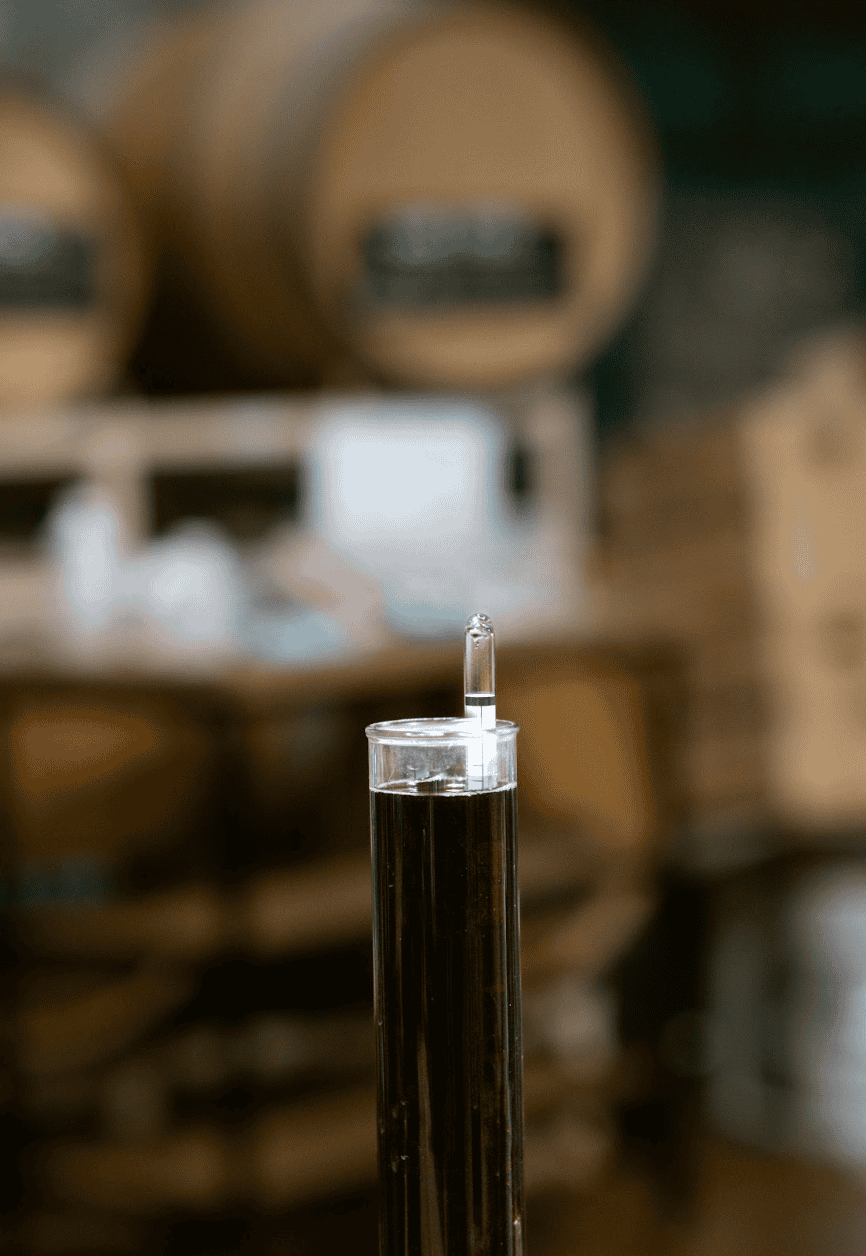
A hydrometer is the floating glass tube you may already know from beer or winemaking. It’s very accurate, but it needs a full test-jar of juice rather than a single drop — so it’s better after you’ve crushed a sample than out in the yard. Many home winemakers use the refractometer to decide when to pick, then the hydrometer to confirm the sugar in the crushed must. We wrote a plain-English guide to hydrometers here if you want the full walk-through.
| What you want | Target at harvest | What it means |
|---|---|---|
| Brix — white grapes | 22 – 24 °Brix | Enough sugar for a balanced ~11–13% wine |
| Brix — red grapes | 23 – 26 °Brix | Reds want a touch more ripeness and body |
| Below ~19 °Brix | Not ready | Wait, or plan to add sugar (see below) |
The one people forget: acid
Cool-climate grapes — which is exactly what most North Van backyards grow — tend to run high in acid. A little acid gives wine its freshness; too much makes it taste sharp and sour, like biting a lemon. This is the single most common reason backyard wine disappoints, and the good news is it’s testable and fixable.
There are two related numbers:
- TA (titratable acidity) — how much acid is in the juice. For most wines you’re aiming for roughly 0.6–0.8%. You can measure it with an inexpensive acid test kit from any winemaking shop.
- pH — a measure of how strong that acid is, and a great overall ripeness signal. Aim for about 3.2–3.4 for whites and 3.3–3.6 for reds. A reliable pH reading needs a proper pH meter, not a paper strip.
When (and why) you add sugar
If your grapes taste good and the acid is in range but the Brix is a bit low — say 18–20 — you don’t have to give up. Winemakers top up the sugar before fermentation so the finished wine reaches a proper alcohol level. This is a normal, centuries-old practice called chaptalization, not a sign you did something wrong.
The principle is simple: more sugar in means more alcohol out. Every point of Brix you add raises the finished wine’s strength by roughly half a percent. You add plain white sugar (or dissolved sugar syrup) to the must, stir it in, and re-check with your hydrometer until you hit your target. The reverse is also true — if the acid is too high, you can gently de-acidify, or blend with water and sugar to bring everything into balance.
The key: adjust before fermentation starts, when a sample tells you the chemistry is off. Once the yeast is working, big swings get much harder.
How to sample the right way (so your numbers mean something)
One grape from the sunniest spot on the vine will lie to you. Ripeness varies cluster to cluster, so sample like a pro:
- Pick berries at random from the middle of clusters on several different vines — not just the ones facing the sun.
- Skip the outer rows and any damaged or shrivelled grapes.
- Collect a decent handful, squish them together, and test the combined juice. That gives you an honest average for the whole vine.
- For reds, if you can, let the crushed sample sit on the skins for about 12 hours before reading — it gives a truer picture of the finished wine.
So — are yours worth it?
Here’s the quick gut-check. Your backyard grapes are worth making into wine when:
- They taste sweet and clean, with brown, crunchy seeds;
- Sugar is in range (or close enough to top up);
- Acid isn’t wildly out of balance;
- There’s enough of it. This is the big one if you want to make a batch with us. A single 23-litre carboy — our standard batch — makes about 30 bottles, and that takes roughly 90–110 lbs of grapes (40–50 kg). A mature backyard vine or two can get there; a single young vine usually won’t on its own.
If the numbers are off but the fruit is healthy, that’s not a failure — it’s just a wine that needs a little adjusting. Almost anything is workable once you know what you’re starting with. The mistake is picking blind, fermenting blind, and hoping.
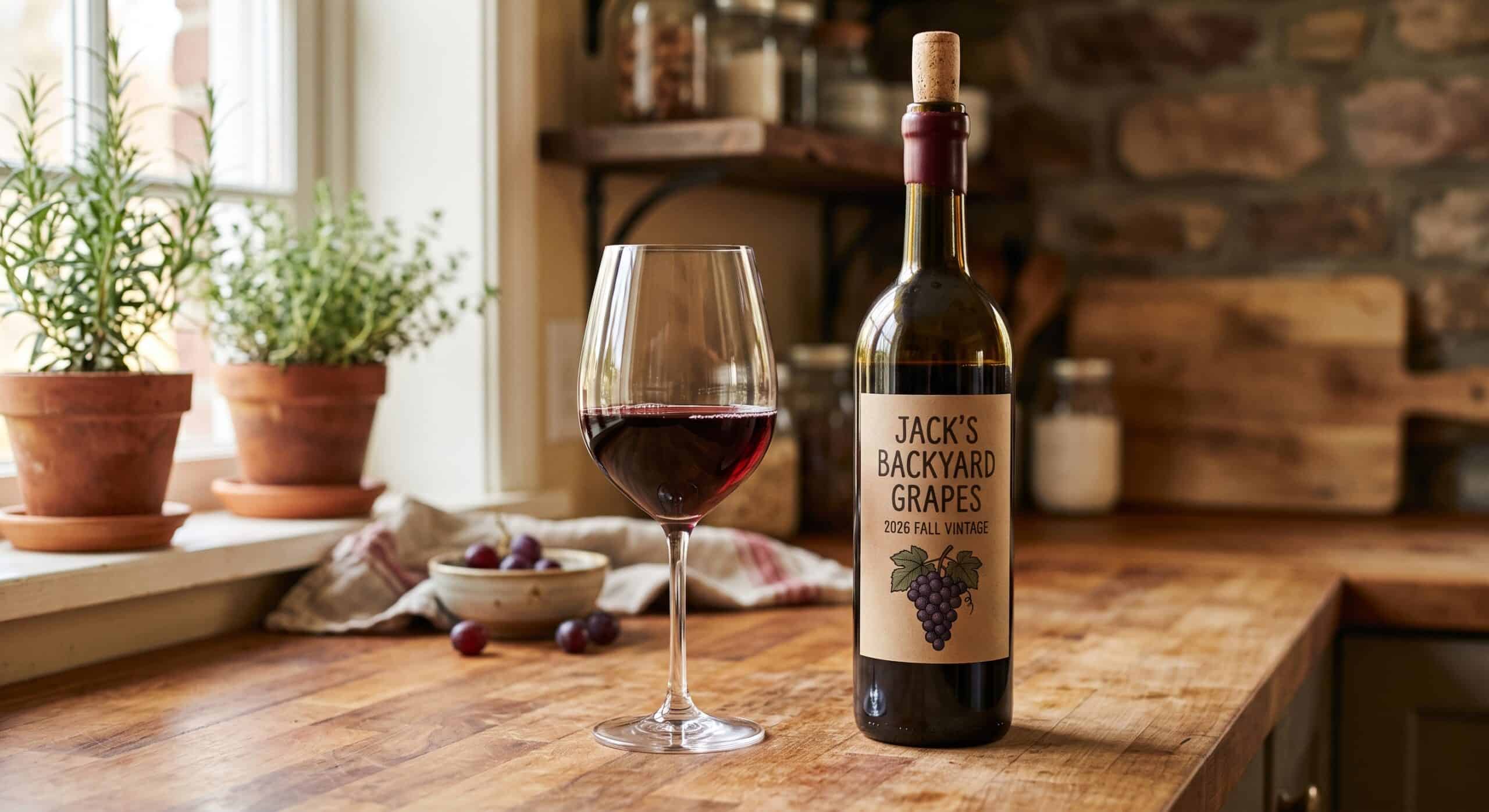
Don’t own the gear? Bring us a sample.
You don’t need to buy a refractometer, an acid kit, and a pH meter to answer one question a year. Before you commit a weekend to picking, bring a small bag of your grapes into Corkit and we’ll test the sugar, acid, and pH for you and tell you straight whether they’re worth it — and if they are, exactly what adjustments they’ll need. We’ve been helping North Shore winemakers since 2000, and there’s nothing we love more than turning “the vine my grandfather planted” into something you can pour at the table.
Bring your backyard grapes in for a free ripeness check
Not sure if your grapes are ready? Drop off a small sample and we’ll test the sugar, acid, and pH — then help you turn a good crop into wine you’re proud of, crafted with us in North Vancouver.
Ask us about grape testing →