
Sweetness is the single thing people get wrong most often when choosing a wine — and the single thing you get to control completely when you make your own.
“Dry” and “sweet” get thrown around like everyone agrees on what they mean. They don’t. A wine that tastes bone-dry to one person reads as fruity to another, and two bottles with the exact same sugar can land completely differently on the tongue. So let’s clear it up — what sweetness actually is, how the scale works from driest to sweetest, and how to dial your homemade wine to exactly where you want it.
What “sweetness” in wine actually means
Wine starts as grape juice full of sugar. Yeast eats that sugar and turns it into alcohol. Whatever sugar the yeast doesn’t eat is left behind — and that leftover is called residual sugar, or RS. It’s measured in grams per litre (g/L), and it’s the number behind every “dry” or “sweet” label on the shelf.
Ferment a wine all the way and almost no sugar survives — that’s dry. Stop the yeast early, or add sugar back afterward, and more survives — that’s sweet. As a rough anchor: every 1% sweetness is about 10 g/L of residual sugar.
The wine sweetness scale, dry to sweet
Here’s the whole spectrum in one place. Sugar levels are approximate — producers draw the lines a little differently — but this is the map almost everyone uses.
| Style | Residual sugar (approx.) | What it tastes like | Classic examples |
|---|---|---|---|
| Bone dry | 0–2 g/L | No sweetness at all; crisp and lean | Brut Nature sparkling, most Cabernet Sauvignon |
| Dry | 2–10 g/L | No obvious sugar; fruit reads as flavour | Chardonnay, Pinot Noir, Sauvignon Blanc |
| Off-dry | 10–30 g/L | A gentle touch of sweetness | Many Rieslings, Gewürztraminer, some rosé |
| Medium / semi-sweet | 30–70 g/L | Clearly sweet but still refreshing | Moscato, White Zinfandel |
| Sweet | 70–130 g/L | Rich, round, dessert-leaning | Sweet Riesling, Lambrusco Dolce |
| Dessert | 130 g/L and up | Syrupy — sipped, not gulped | Port, Sauternes, Ice Wine |
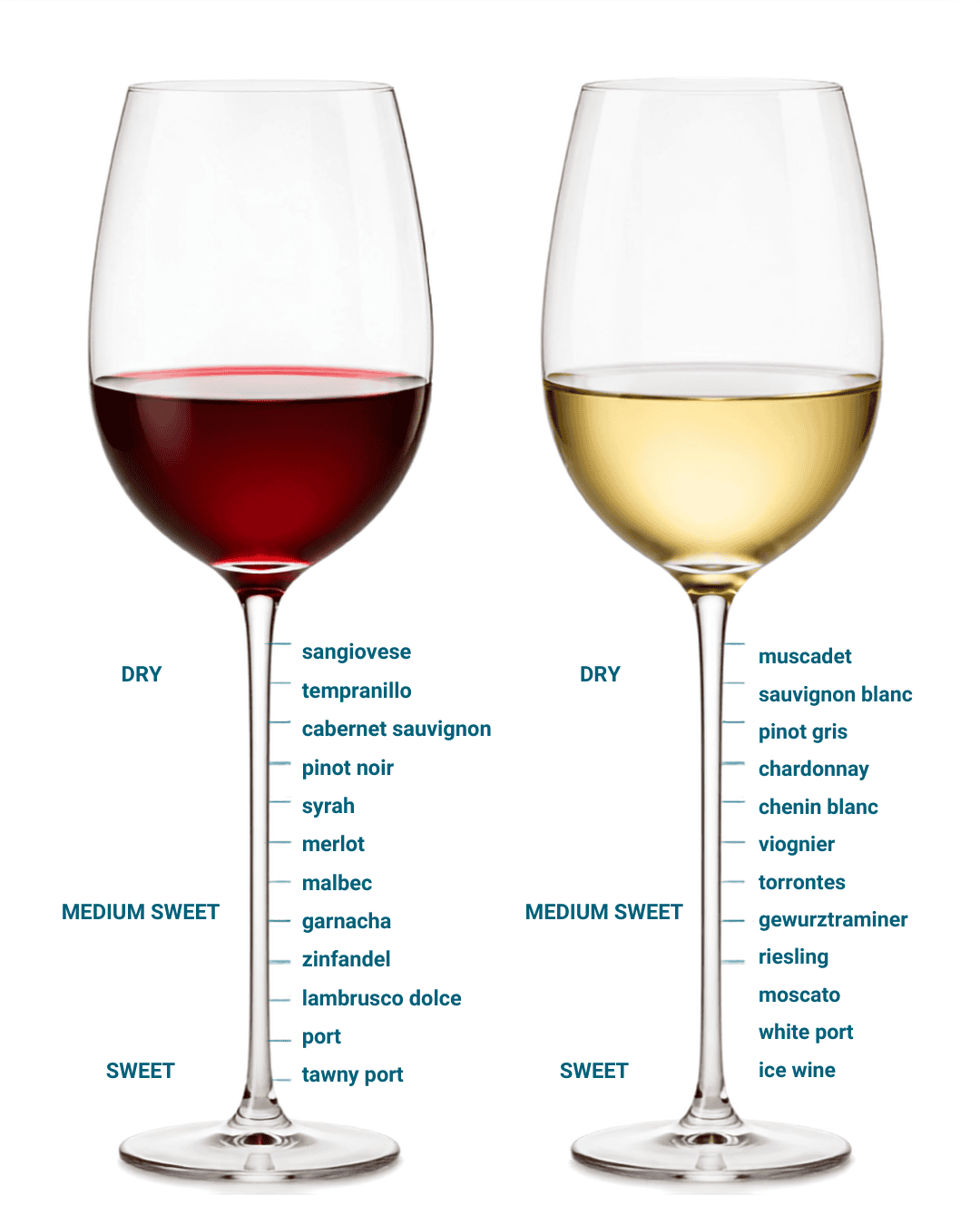
Want the quick-reference version for popular bottles? That’s exactly what our wine sweetness charts are for — keep them handy next time you’re facing a wall of labels.
Why two wines with the same sugar taste different
Here’s the twist that trips people up: residual sugar isn’t the whole story. What you actually taste is the balance between sugar and acidity. High-acid wines wear their sweetness lightly — a zippy Riesling with 30 g/L can taste barely off-dry, while a soft, low-acid wine at the same sugar tastes frankly sweet.
Rule of thumb: acidity is sweetness’s counterweight. If a wine tastes cloying, it usually needs more acid, not less sugar. If it tastes thin and sharp, a whisper of sweetness rounds it out.
The winemaker’s advantage: you decide
When you buy a bottle, the sweetness is locked in. When you make your own, it’s a dial you get to turn. Here’s how to land it exactly where you like.
1. Start with the right style
The easiest lever is your kit. Dry reds and crisp whites are built to finish dry; fruit-forward kits (think our Island Mist–style fruit wines) are designed to finish off-dry to sweet. Choosing the right base gets you most of the way before you touch a thing.
2. Ferment dry, then back-sweeten
The reliable way to hit a target isn’t to stop fermentation partway — that’s hard to control. Instead, let the wine ferment all the way dry, then add a measured amount of sweetness back. You get a clean, stable wine and precise control over the final level.
3. Stabilize first — this step is non-negotiable
If you add sugar to a wine that still has live yeast, the yeast simply eats it and dries the wine right back out (and can build pressure in the bottle). Before sweetening, stabilize: add potassium sorbate plus a Campden tablet to shut the yeast down, and give it about 24 hours to settle.
4. Sweeten to taste, not to a recipe
Everyone’s “perfect” is different, so taste your way there. Make a simple syrup, pull a 100 ml sample of your wine, and add the syrup a few drops at a time, tasting until it’s right. Then scale that ratio up to the full batch. A hydrometer reading before and after tells you exactly how dry it fermented — but your palate makes the final call.
Match the sweetness to the moment
None of these levels is “better” — they’re for different moments. Bone-dry and dry wines love the dinner table and rich food. Off-dry is the crowd-pleaser that suits almost everyone. Medium and sweet wines shine on the patio, with spicy food, or as dessert itself. Making your own means you can keep a couple of levels on hand for whatever the night calls for.
Make yours exactly as sweet as you like it
At Corkit in North Vancouver, you don’t settle for the sweetness the label chose — you make your own, dialled to your taste, about 30 bottles at a time. Come find your level.